
All-weather autonomy: What real-world pilots teach us about resilient, open systems
Updated: Dec 23, 2025
By: Joni Niskala, Umar Hamid, and Margarita Khartanovich of Sensible 4

Autonomous vehicles and robots are often developed under idealized conditions - clean sensor data, predictable environments, stable connectivity. In practice, however, real-world autonomy operates in far messier settings. It must contend with rain, snow, fog, dust, glare, darkness, and patchy networks – sometimes all at once. These harsh variables expose the gap between autonomy that works in principle and autonomy that works in practice.
Imagine autonomous electric mining trucks in Inner Mongolia, China - a fleet of 100 driverless haul trucks that operate in an open-pit coal mine, designed to handle extreme cold (-40°C), dust, and long operational hours. These vehicles leverage 5G and AI for vehicle-cloud coordination, demonstrating how resilience and connectivity are integrated in harsh, real-world environments. Such deployments highlight the growing momentum toward autonomous systems that can maintain performance in all weather and terrain conditions, far beyond the lab or test track.
The hidden bias of “good-weather” autonomy
Many current autonomy stacks implicitly assume favorable conditions. Machine learning models are trained on curated datasets, sensors are calibrated under nominal settings, and validation tests usually occur in sunny, well-marked environments. This accelerates early development, but it introduces a hidden bias: systems become fragile when exposed to conditions that are actually quite common.
Indeed, much of the autonomous vehicle (AV) industry historically concentrated testing in fair-weather locales like California and Arizona. The result is that when these systems face heavy snow, mud, or glaring light outside the lab, their perception and control algorithms often struggle or disengage.
Real-world pilots have shown how this bias plays out. In northern regions, winter can last for months – snow buries lane markings, LiDAR returns weaken, cameras lose contrast in whiteout conditions, and GPS accuracy deteriorates. In off-road mining or construction sites, continuous dust, vibration, and muck present year-round vision and localization challenges. Yet traditionally, many autonomous vehicles treat such adverse weather as an anomaly and rely on fallback behaviors like abruptly halting or handing control back to a human whenever sensors get confused. While stopping is a safe default for a demo, it severely limits operational value when autonomy is supposed to be working through all seasons and shifts.
In short, a “good-weather only” autonomy stack might impress in Silicon Valley, but it has little utility for a mine operator in Lapland or a port operator in Singapore. The next generation of autonomous systems needs to be born and bred in the wild – designed from the ground up for resilience amid unpredictability.
Resilience as a system property, not a feature
One of the clearest lessons from the field is that resilience cannot be simply added on later – it must be engineered into the system architecture from the start. A truly resilient autonomous vehicle is built like a hardy organism: it has multiple senses and backup strategies to survive in a hostile environment.
This begins with sensor diversity, but it doesn’t end there. Having many sensors is no guarantee of robustness if they all fail under the same conditions or if the software logic is too brittle. What matters is how sensor inputs are fused, cross-validated, and gracefully degraded when confidence drops. For instance, if cameras are blinded by fog or dust, the system should down-weight the camera data and lean more on radar or LiDAR; if GPS signals are lost in a canyon or tunnel, the vehicle should seamlessly fall back on onboard inertial and vision-based localization.
Modern designs already embrace this: new navigation solutions combine LiDAR, IMU, and cameras to maintain precise positioning even with zero GPS signal, enabling operation in GNSS-denied areas like mines or urban canyons. Such capabilities illustrate resilience by design – the vehicle remains functional when any single sensor or external input becomes unreliable.
Crucially, architectures that support this kind of graceful degradation tend to be much easier to deploy in new locations. A system tolerant of imperfect sensor calibration, partial observability, or evolving environment maps can be stood up quickly at a new site, without exhaustive fine-tuning. In contrast, a brittle system that demands precise pre-mapping and calibration will require weeks of lab prep and still might fail when the real world deviates from the model.
Field teams have found that designing for imperfection actually accelerates time-to-operation: if your autonomous robot doesn’t need pristine conditions to function, you can bring it online faster and start learning from real operations sooner. In turn, those real-world learnings feed back into making the system even more robust. Resilience and rapid deployment, it turns out, go hand in hand (more on this below).
Rapid deployment as a resilience multiplier
In dynamic, real-world operations, autonomy is rarely deployed into a static, unchanging environment. Construction sites evolve weekly, warehouse layouts change, mines expand into new areas, weather fluctuates daily. The ability to deploy, adapt, and redeploy quickly becomes a core enabler of resilient autonomy. Rapid deployment means an autonomous system can be picked up and successfully dropped into a new site or scenario with minimal fuss – an essential trait when each location has its own quirks and no amount of upfront testing can cover every contingency.
Real-world pilot programs suggest that fast deployment depends on a few key practices:
Minimal reliance on detailed pre-mapping. The system should not require an exhaustively mapped environment to start operating.
Low sensitivity to specific infrastructure features. Autonomous vehicles must not depend too heavily on things like painted lane markings or fixed beacons that might be absent or obscured. They should adapt to whatever cues are available in the environment.
Separation of vehicle, autonomy stack, and operational tools. In an open architecture, the same core autonomy software can run on different vehicle platforms or in different sites, with only configuration changes or plugin modules for local specifics. This avoids having to “re-invent the wheel” for each new deployment.
Open and modular autonomy architectures support these practices by enabling reuse of the same core system across multiple sites and vehicle types, rather than rebuilding or retraining from scratch. This is particularly important in harsh or remote environments, where lengthy on-site calibration or validation is impractical due to weather windows and operational pressures. If you can push a software update or swap a sensor and be up and running in hours instead of months, you dramatically shorten the feedback loop.
In fact, teams report that systems which can be deployed quickly tend to accumulate diversified operational data much earlier, thereby improving their robustness over time. Speed of deployment and long-term resilience reinforce each other in a virtuous cycle. Conversely, if it takes a year to get your autonomous vehicle working at a new site, you’ve lost a year of real-world learning and possibly missed the business opportunity.
Why open platforms matter (especially in harsh conditions)
Challenging environments also expose the limitations of closed, monolithic autonomy systems. When conditions change or new constraints emerge, closed systems are difficult to adapt, extend, or integrate with complementary technologies. This is where open autonomy principles become critical. An open platform lets operators and integrators customize the system to fit new conditions, rather than being stuck with one vendor’s black-box solution. In particular, open autonomy enables organizations to:
Combine sensors with diverse properties and failure modes. For example, adding a thermal camera or ground-penetrating radar for specific weather or underground conditions, alongside the base sensor suite.
Integrate third-party perception, localization, or safety modules. If a new algorithm or component comes along (say, a better vision module trained for snowy imagery), an open system can plug it in without a complete rewrite.
Adjust configurations without redesigning the whole stack. Users can tune parameters or swap out modules (like different mapping or control software) while preserving the core autonomy stack’s integrity.
Even the defense industry – known for stringent requirements – has fully embraced open architectures to achieve resilience. The U.S. Department of Defense now mandates a Modular Open Systems Approach (MOSA) for many new platforms, emphasizing modular components, publicly defined interfaces, and the ability to upgrade or replace parts independently.

From open principles to scalable, investable platforms
As open, all-weather autonomy moves from concept to deployment, the same architectural choices that enable technical resilience and rapid rollout also determine commercial scalability and investability. An autonomous fleet that only works in perfect conditions or only works with one vendor’s ecosystem will have limited market reach. In contrast, a platform that is robust in diverse environments and interoperable with other systems can be replicated across industries and sites.
Open autonomy doesn’t just lower technical barriers; it lowers business and adoption barriers by inviting more partners and use-cases. By democratizing access to advanced driving or robotics technology, open platforms allow different companies to focus on their strengths – and integrate with each other. This accelerates ecosystem partnerships, where one company’s vehicle can run another’s autonomy software at a customer’s site, for example. In short, openness strengthens the whole value chain, allowing the industry to scale faster together .
From both a deployment and an investment perspective, three enablers consistently emerge as most important:
Open data & simulation platforms. All-weather autonomy depends on data from real operating conditions – snow, heavy rain, glare, dust, low visibility, intermittent GPS, you name it. Today, much of this critical data is fragmented in silos (held by different companies or in different regions like the Nordics vs. the Middle East). Embracing open data sharing and common simulation environments can centralize learning and validation. Shared datasets and simulators let everyone train and test against a wider range of scenarios, which reduces duplicated effort and improves safety for all. We are already seeing steps in this direction: researchers in Canada recently released an open dataset of snowy-driving scenes to help AV developers train algorithms for winter weather.
Interoperable APIs & modular software. A plug-and-play autonomy stack, built on clearly defined interfaces and modules, allows new perception, localization, or safety components to be integrated without a full system redesign. For example, if a startup develops a better vision module for night fog, an open interface can let an operator drop that into their vehicle’s stack seamlessly. This modularity shortens development cycles and lowers integration risk when incorporating new tech. It also supports scaling across different vehicle models, payloads, or site requirements – you can swap in a larger sensor suite for a truck vs. a smaller one for a drone, using the same core software.
Shared testbeds & living labs. Simulation is invaluable, but nothing beats testing an autonomous system in the real world with real users and regulators in the loop. Living labs – whether an autonomous mining zone, a “smart” highway corridor – provide these environments where developers, industry, and policymakers can all learn together. Such shared testbeds allow validation of autonomy under actual operating conditions (extreme heat, nighttime construction zones, etc.) before full commercial rollout.
A platform built on shared data, modular design, and collaborative validation will improve faster and cost less to deploy widely. It’s no coincidence that major industrial OEMs and investors are now gravitating to these principles. For example, the global market for autonomous construction and mining equipment is already valued in the tens of billions and is projected to roughly double by the early 2030s, reflecting strong confidence in the sector’s growth. Caterpillar’s CEO recently affirmed he is “long-term bullish” on autonomy’s potential.
Likewise, defense and government funding for autonomy is soaring: the U.S. Department of Defense’s latest budget explicitly allocates $13.4 billion for autonomous systems development in a single year, the first time autonomy has had its own budget line item of that magnitude. Private venture investment is following suit, especially after seeing autonomy deliver value in industrial domains even as consumer robotaxi timelines lagged.
At the same time, stricter safety and environmental regulations are coming into force, encouraging the use of autonomous systems to reduce workplace accidents and emissions. In the mining industry, for example, new safety rules and ESG commitments have made autonomous haulage systems highly attractive: they remove drivers from harm’s way and can optimize fuel or electricity usage. Komatsu, a leading equipment manufacturer, noted that autonomous haul trucks are a “crucial solution” to both the safety imperative and the skilled operator shortage in mines. And as large mine operators commit to carbon-reduction, many are replacing diesel haul trucks with electric autonomous fleets to hit sustainability targets.
Adaptive operational design domains in practice
Another insight from real deployments is the need for adaptive Operational Design Domains (ODDs). Traditionally, an ODD is defined as the set of conditions under which an autonomous system is officially allowed to operate (for example, “clear weather, daylight, on mapped urban streets” might be an ODD). These are often treated as fixed checkboxes. Field experience suggests a more dynamic approach is required for resilient systems.
Weather-aware, rapidly deployable autonomy benefits from ODDs that evolve based on real-time system performance and environmental feedback, rather than rigidly gating where the vehicle can function. In practice, this means the vehicle continuously evaluates its own confidence and the external conditions to decide how to operate at a given moment.
For instance, instead of permanently forbidding operation in rain or snow until the system is “fully validated” for those conditions, an adaptive ODD strategy might allow an autonomous vehicle to run at a lower speed or with extra caution during the first heavy snowfall, expanding its capabilities as it gathers more data and the software improves.
The system essentially starts in a conservative envelope and then pushes outward as confidence grows – without any change to the underlying architecture. This approach enables faster go-live timelines. Operators don’t have to wait for every possible corner case to be proven out in advance; the system can begin adding value under known-safe conditions and then continuously validate in motion to broaden its domain.
Importantly, this is always done with safety as the first priority: if conditions exceed what the vehicle has seen before or handled in simulation, it might temporarily fall back or ask for human assistance, but it doesn’t require a full stop to progress – it learns and adapts on the job. Such adaptive domain management is likely to become part of best practices (and regulatory frameworks) as the industry seeks ways to deploy faster without compromising safety.
It shifts the mindset from a static certification of “this vehicle is safe under X, Y, Z conditions” to a dynamic assurance that “this vehicle knows when it is safe to operate and when to slow down or disengage.” In the long run, that dynamic awareness is itself a hallmark of a resilient, intelligent autonomous system.
Lessons from pilots: continuous validation in the field
Real-world pilots consistently reveal failure modes and scenarios that no one imagined beforehand. Sensors get muddied or frozen. Construction zones appear where maps said a clear road would be. Wildlife, fallen trees, or flash floods might interrupt operations. Weather events combine in nonlinear ways – a glare at dusk plus a dirty sensor lens plus a GPS glitch might all happen together. These are the kinds of challenges that only surface in the real world.
Early field deployments have underscored a few recurring lessons for validating autonomy:
Validation must be continuous and operational, not one-and-done. It’s not enough to “prove” the system in a big upfront test and then assume it will work forever. Autonomous systems should be monitored and evaluated on an ongoing basis during operations – effectively learning while doing. Every day of operation is also a day of validation (or invalidation) for some aspect of the system.
Early deployment (even with constraints) accelerates learning. There is huge value in deploying an autonomous system early in a limited capacity – say, only on quiet shifts or only in a geofenced area – because it starts generating real data and experience. Those insights often lead to rapid iteration that would not happen if the project stayed in R&D mode for years. In other words, you often learn more from 100 hours of shadowing real operations (with safety controls) than from 10,000 hours of pure simulation. Field data has a way of breaking assumptions and revealing what really matters.
Human feedback loops are critical. The operators, safety drivers, or end-users interacting with the autonomous system provide invaluable feedback that no amount of internal testing can replicate. A remote overseer might notice the vehicle misidentifies a mud puddle as an obstacle and can flag that for developers. Designing channels for humans to give input (and having the autonomy team actively listen) greatly speeds up refinement. Ultimately, frontline operators become part of the development loop, helping tune the system for real-world use.
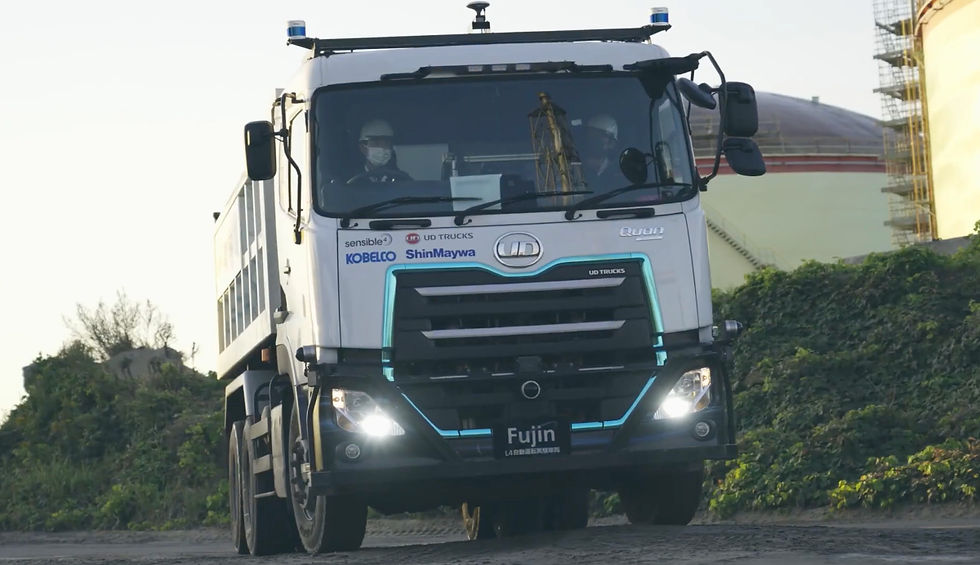
Notably, open autonomy ecosystems make these practices easier by enabling shared tools, data, and validation methods across the community. If every company has to independently discover that a certain LiDAR freezes in a blizzard, that’s a lot of duplicated learning (and perhaps accidents). But if there’s a forum or data exchange where such lessons from pilots are openly circulated, everyone can harden their systems faster. Similarly, standard interfaces can allow plugging in new test modules or safety monitors without rebuilding the whole stack, facilitating continuous improvement.
In essence, openness accelerates collective learning: each deployment not only benefits its operator but also contributes to the broader knowledge pool of what works and what fails in autonomous systems.
Toward a practical autonomy narrative
Perhaps the most important lesson from all-weather, real-world autonomy is cultural. The industry benefits from moving toward a more practical narrative – one that values robustness, adaptability, and time-to-operation as much as (or more than) flashy demonstrations of algorithmic prowess.
For years, the public narrative around autonomous vehicles was driven by milestone fever (“look, no hands!” moments on sunny highways). But achieving dependable autonomy at scale will come from steady gains in resiliency and real-world validation, often in less glamorous locales like mines, farms, or nighttime trucking routes. We should celebrate a vehicle that keeps working in a downpour as much as one that flawlessly handles a sunny day left turn.
Open autonomy principles encourage this mindset. By prioritizing systems that can be deployed where the work actually happens – in all the grime, weather, and complexity that entails – the focus shifts to what truly matters for end-users. A self-driving vehicle that can operate reliably in a Finnish blizzard or a remote desert mine is far more impressive (and valuable) than one that can drive itself only on a Silicon Valley boulevard under ideal conditions.
For the autonomy community – from engineers and product leaders to regulators and investors – the path forward is clear. We need to design for imperfect environments, enable rapid deployment, and share real-world lessons openly. By doing so, autonomy can move out of the controlled demo phase and into dependable operation at scale, delivering value in the messy, complex world in which we all actually live.


